
The Ultimate LinkedIn Profile Optimization Guide for Self-Funded Searchers
Author: Geoff Cudd, Founder, Deal Prospectors
Turn Your Profile Into a Deal-Flow Machine
|
LinkedIn Optimization, Done For You Let Deal Prospectors do the heavy lifting for you. We’ll optimize your profile and create a short, professional intro video that builds credibility and improves outreach response before your first message is ever sent.” Use code EC for $50 off. |
Why Your LinkedIn Profile Is Your Most Critical Search Asset:
When searching for a business to acquire, your LinkedIn profile isn’t just a digital resume, it’s your primary outbound marketing channel, your credibility validator, and often the first impression you’ll make on potential sellers.
Yet most searchers fundamentally misunderstand how to optimize their profiles for this unique audience.
Users with optimized LinkedIn profiles are much more likely to receive opportunities from sellers.
For searchers specifically, your LinkedIn profile serves as a 24/7 billboard that can pre-qualify sellers, communicate your value proposition, and build trust before you ever have a conversation.

According to the Stanford Graduate School of Business 2024 Search Fund Study, nearly 100 new search funds were launched in the U.S. and Canada in 2023, marking it one of the most active years in the industry’s history.
Combined with the rapid rise of self-funded searchers, this growth has significantly intensified competition for high-quality deal flow.
Source: Stanford GSB – 2024 Search Fund Study
–
The Fundamental Mistake -> Writing for the Wrong Audience
The most common and costly mistake searchers make is treating their LinkedIn profile like a job application rather than a seller acquisition tool.
They write in corporate jargon, highlight their professional credentials, and fail to communicate the one thing sellers care about most:
“What’s in this for me?”
The Problem: Sellers don’t care that you’re a “self-funded searcher” or that you have an MBA from a top-tier business school.
These terms mean nothing to a 62-year-old HVAC business owner in Portland who’s built their company over 25 years.
The Solution: Every element of your profile must answer the seller’s unspoken questions:
- Who is this person?
- Are they serious about buying MY type of business?
- Can I trust them with what I’ve built?
- Will they preserve my legacy and take care of my employees?
- Do they have the financial capability to close?
–
The Seven Critical Elements of a Conversion-Optimized Searcher Profile
1. Your Profile Photo -> Building Trust in Two Seconds
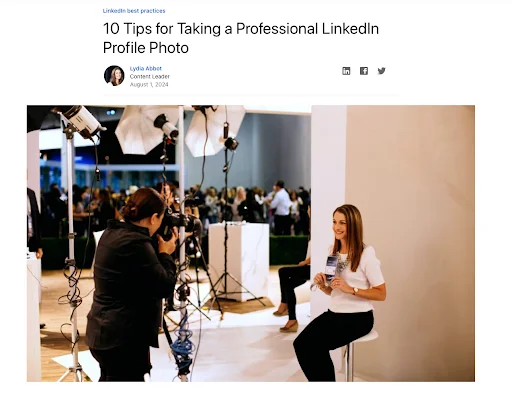
Your profile photo is the first element that establishes credibility. According to Linkedin best practices profiles with professional photos receive significantly more engagement and trust signals.
What Works:
- Professional lighting that’s neither too dark nor harshly lit
- Genuine, approachable smile (not forced corporate headshot)
- Clean, uncluttered background
- Business casual attire that’s professional but not intimidating
- Direct eye contact with the camera
Why It Matters: Sellers are entrusting you with their life’s work.
Your photo needs to convey competence, trustworthiness, and approachability simultaneously. This isn’t the place for a casual snapshot or a photo from five years ago.
2. Your Banner -> Your Real Estate
The banner image at the top of your profile is prime real estate that most searchers leave blank or fill with a generic image.
This is a critical error, it’s free advertising space that every profile visitor sees immediately.
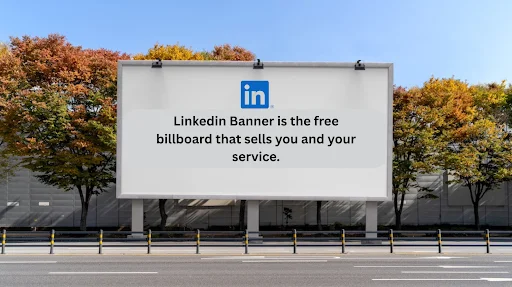
The Formula for an Effective Banner:
- What you’re buying: Industry categories (HVAC, Plumbing, Manufacturing, etc.)
- Where you’re buying: Specific geographic region
- Deal size: EBITDA or revenue range to help sellers self-qualify
- Emotional hook: “Preserving Your Legacy” or “Protecting Your Team”
Example: “Acquiring Home Services Businesses in the Pacific Northwest | $1M-$3M EBITDA | Your Legacy, My Life’s Work”
This single line immediately tells a seller:
- You’re actively buying (not just exploring)
- You’re focused on their specific industry
- You’re local to their region
- They qualify based on size
- You care about what they’ve built
3. Your Headline -> The 220-Character Sales Pitch
Your headline appears everywhere on LinkedIn, in search results, comments, connection requests, and messages. It’s your elevator pitch compressed into 220 characters.
What Doesn’t Work:
- “Self-Funded Searcher at [Your Fund Name]”
- “Looking to Acquire a Business”
- “Former Investment Banker | MBA”
These headlines are written for other searchers and investors, not for sellers.
They use insider terminology and fail to communicate value.
What Works:
Acquiring [Industry Type] Businesses in [Region] | [Deal Size] | [Emotional Hook] | [Credibility Marker]
Real Examples:
For Home Services: “Acquiring Profitable Home Services & Trades Businesses in the Pacific Northwest | $1M-3M EBITDA | Preserving Your Legacy”
For Healthcare: “Acquiring Healthcare Service Practices in South Florida | $500K-$2M EBITDA | Preserving Your Legacy & Team | 20+ Years Healthcare Operations”
For B2B Services: “Acquiring Massachusetts B2B Services & Manufacturing Companies | $250K-$1.5M EBITDA | Your Legacy, My Life’s Work | 10-Year M&A Track Record”
4. Location Settings -> Eliminate Geographic Disconnect
One subtle but critical optimization: Your listed location should match your target acquisition region, not where you currently live.
The Problem: If you’re targeting Pacific Northwest businesses but list California as your location, sellers will immediately think “too far away” and move on.
The Solution:
- Location field: Set to your primary target city/region
- About section: Include a line like “Based in California, actively acquiring businesses throughout the Pacific Northwest” if there’s any geographic discrepancy
This small change eliminates a major objection before it forms.
5. The About Section -> Your Conversion Engine
Your About section is where you convert curious sellers into conversations.
This is not the place for your career narrative or professional accomplishments, it’s your sales page.
The Proven Structure:
I’M ACQUIRING [BUSINESS TYPE] IN [REGION]
[2-3 sentences establishing your intent, local commitment, and that this is your life’s work, not a financial flip]
🎯 WHAT I’M LOOKING FOR:
– [Specific industries with examples]
– [EBITDA range] ([Revenue range])
– [Operating history requirement]
– [Key characteristics: recurring revenue, customer concentration, etc.]
– [Specific counties/regions if relevant]
💼 WHY BUSINESS OWNERS CHOOSE ME:
✓ [Local commitment – specific city/region]
✓ [Operating commitment – you’ll run it, not hire someone]
✓ [Years of relevant experience with specific results]
✓ [Track record with measurable outcomes]
✓ [Respect for culture, employees, legacy]
✓ [Flexible deal structures: seller financing, earnouts, equity rollover]
✓ [Financing secured/ready to close]
📊 MY BACKGROUND:
[2-3 sentences highlighting relevant operational or financial experience that makes you credible. Focus on outcomes, not titles.]
💬 THINKING ABOUT YOUR NEXT CHAPTER?
Even if you’re not ready to sell for 2-5 years, I’d be honored to connect.
Many of my best relationships started as informal conversations.
All conversations are strictly confidential.
📧 [Email] | 🌐 [Website] | 📱 [Phone]
Why This Structure Works:
- Uses emoji visual anchors for easy scanning (LinkedIn is a busy platform)
- Leads with clear intent (eliminates confusion)
- Provides self-qualification criteria (saves everyone time)
- Addresses seller concerns proactively
- Includes social proof through experience
- Removes pressure with the “2-5 years out” language
- Emphasizes confidentiality (critical for sellers)
- Provides multiple contact methods
Critical Language Choices:
❌ Avoid: “I began a search process” (too passive)
✅ Use: “I’m actively acquiring” (demonstrates commitment)
❌ Avoid: “Considering opportunities” (sounds tentative)
✅ Use: “Searching to acquire and operate” (clear intent)
❌ Avoid: “Self-funded searcher” (insider jargon)
✅ Use: “Acquisition entrepreneur” or simply describe what you’re doing
6. Featured Section -> Your Proof Points

The Featured section appears prominently on your profile and allows you to showcase content that builds credibility.
Most searchers either leave this blank or fill it with professional certifications that mean nothing to sellers.
What to Feature:
- Your Website/Search Firm Landing Page
- Should have a clean, professional design
- Clear acquisition criteria
- About you section with photo
- Contact information
- Testimonials if available
- One-Page Acquisition Criteria PDF
- Professional design (use Canva if needed)
- Your photo and contact info
- Industries you’re targeting
- Geographic focus
- Deal size parameters
- What makes a business attractive to you
- Your background in 3-4 bullet points
- Call to action
- Video Introduction (30-90 seconds)
- Film in good lighting with clean audio
- Introduce yourself naturally
- Explain what you’re looking for
- Share why you’re passionate about being an owner-operator
- Include a call to action
- Keep it authentic, not overly scripted
- Testimonials or Case Studies
- If you’ve completed deals, get testimonials from sellers
- If you’re early in search, use testimonials from former colleagues about your character and work ethic
- Written recommendations work, but video testimonials are gold
Why This Matters: The Featured section provides third-party validation and allows sellers to learn more about you on their own terms.
It’s the difference between “interesting” and “credible.”
7. Experience Section -> Relevance Over Resume
Your experience section should emphasize operational achievements and results that translate to business ownership, not just job titles and responsibilities.
Transform This:
Investment Banking Analyst
XYZ Bank | 2018-2021
– Analyzed financial statements
– Built financial models
– Supported M&A transactions
Into This:
Investment Banking Analyst | Corporate Finance
XYZ Bank | 2018-2021
Advised 50+ small and mid-sized business owners through M&A transactions, valuations, and strategic growth decisions.
Key Experience:
– Conducted due diligence on $500M+ in transaction volume
– Built financial models to evaluate business performance and growth potential
– Negotiated transaction structures including seller financing and earnouts
– Worked directly with owner-operators to understand value drivers and succession planning
The Difference:
The second version demonstrates that you understand how real businesses work, have interacted with business owners, and know what makes companies valuable.
—
Posting Strategy: Staying Visible Without Overwhelming
An optimized profile is just the foundation.
Consistent, strategic posting keeps you visible and reinforces your expertise.
The 30-Day Rule: Post at least once every 30 days to maintain visibility.
According to LinkedIn’s algorithm, profiles with recent activity rank higher in search results and appear more active to visitors.
What to Post:
- Search Updates (Monthly)
- Share where you are in your search
- Mention industries you’re exploring
- Ask for introductions
- Example: “Month 4 of my search for an HVAC or plumbing business in Oregon/Washington. If you know any owners considering retirement in the next few years, I’d love to connect.”
- Industry Insights (Weekly-Biweekly)
- Share articles or observations about your target industries
- Comment on trends affecting small businesses
- Demonstrate your knowledge and passion
- Example: “The HVAC industry is facing a massive labor shortage, with 75% of technicians nearing retirement age. For established businesses with strong training programs and culture, this creates an enormous competitive advantage…”
- Buyer-Seller Education (Monthly)
- Demystify the acquisition process
- Share what you’ve learned
- Address common seller concerns
- Example: “Many business owners worry about what happens to their employees after a sale. Here’s what I’ve learned about structuring deals that protect team members…”
- Personal Journey (Occasional)
- Share authentic stories from your search
- Highlight interesting businesses or owners you’ve met
- Keep it respectful and confidential
- Example: “Had a fascinating conversation today with a 35-year business owner in the marine services industry. His insights on building customer loyalty were incredible…”
Engagement Best Practices:
- Comment meaningfully on posts from business brokers, accountants, and attorneys in your target region
- Join and participate in industry-specific LinkedIn groups
- Respond to all comments on your posts
- Use relevant hashtags: #searchfund #entrepreneurship #businessacquisition #[yourindustry]
—
Why This Matters (Backed By Stanford Search Fund Study )
The search fund industry has exploded, creating intense competition for quality deal flow:
- 681 traditional search funds have been formed in the U.S. and Canada since 1984
- Nearly 100 new funds were launched in 2023 alone
- 75% of searchers successfully complete an acquisition
- Self-funded searches now represent the majority of new searchers
- Over 50% of U.S. small businesses are owned by people 55+ without clear succession plans
With this level of competition, your LinkedIn profile must work as hard as possible to attract sellers and differentiate you from other buyers.
Research specific to LinkedIn reinforces these strategies:
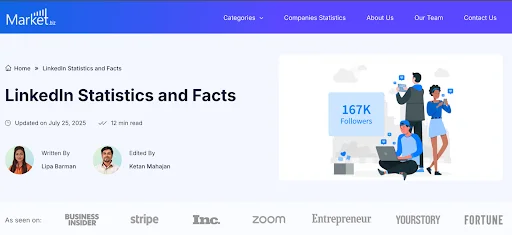
- Over 70% of recruiters (and by extension, people seeking specific professionals) use LinkedIn as their primary search tool
- Profiles with complete information see 40 times more opportunities
- 90% of B2B marketers use LinkedIn for distribution, making it the premier professional platform
- More than 70 million companies maintain a presence on LinkedIn
For searchers, this means sellers and their advisors are absolutely looking at LinkedIn when evaluating potential buyers.
—
Common Mistakes That Kill Conversion
❌Mistake #1: Using Insider Language
The Problem: Terms like “self-funded searcher,” “search fund,” “ETA,” “buy-side M&A” mean nothing to business owners. These are your tribe’s language, not theirs.
The Fix: Speak in plain English. Say “I’m looking to buy and personally operate a business” instead of “I’m a self-funded searcher pursuing ETA.”
❌Mistake #2: Leading with Your Credentials
The Problem: “MBA from Harvard | Former Investment Banker | CFA” tells sellers you’re smart, but it doesn’t tell them why they should trust you with their life’s work.
The Fix: Lead with what you’re buying, where, and why you’ll be a good steward. Your credentials are supporting evidence, not the main story.
❌Mistake #3: Vague Deal Criteria
The Problem: “Looking for businesses in the Pacific Northwest, ideally in services or manufacturing” is too broad and doesn’t help sellers self-qualify.
The Fix: Be specific: “$1M-$3M EBITDA, home services (HVAC, plumbing, electrical), Oregon/Washington, 10+ year operating history, recurring customer base.”
❌Mistake #4: No Call-to-Action
The Problem: Sellers read your profile, think “interesting,” and then… nothing. No clear next step.
The Fix: Multiple, easy ways to contact you. Email, phone, website, and an explicit invitation to reach out, even if timing isn’t perfect.
❌Mistake #5: Stale Content
The Problem: A great profile from six months ago with no recent activity signals you may not be actively searching anymore.
The Fix: Post every 2-4 weeks minimum. Even brief updates maintain visibility and signal active engagement.
❌Mistake #6: Ignoring the Mobile Experience
The Problem: Over 60% of LinkedIn usage happens on mobile devices.
If your profile isn’t optimized for mobile viewing, you’re losing conversions.
The Fix:
- Test how your profile looks on mobile
- Keep paragraphs short (3-4 lines max)
- Use emoji visual breaks
- Ensure your banner image text is readable on small screens
❌Mistake #7: No Social Proof
The Problem: Sellers need reassurance that you’re legitimate and trustworthy.
A profile with no recommendations, no featured content, and no activity screams “unproven.”
The Fix:
- Request recommendations from former colleagues, mentors, or advisors
- Feature your website and acquisition criteria
- Share endorsements from people who’ve worked with you
- If you’ve closed a deal, feature a seller testimonial (with permission)
—
Advanced Optimization Strategies
🙌 Strategy #1: Geographic Targeting Through Content
Create and share content that’s hyper-relevant to your target region:
- Comment on local business news
- Join regional business groups on LinkedIn
- Share insights about your target region’s economy
- Attend and post about local events
This demonstrates commitment and helps you appear in local searches.
🙌 Strategy #2: Building a Network of Referral Partners
Your LinkedIn network should include:
- Business brokers in your target region
- Accountants and CPAs
- Attorneys specializing in small business
- Bankers and SBA lenders
- Other searchers (non-competing geographies)
- Advisors to small businesses
Post content that provides value to these people, and they’ll remember you when they encounter a potential seller.
🙌 Strategy #3: The “Soft Launch” Approach
Before you finalize your search criteria, consider a “soft launch” where you:
- Optimize your profile for initial reactions
- Share it with 10-15 trusted advisors
- Ask for honest feedback
- Test different headlines and about sections
- Iterate based on what resonates
This prevents you from launching a profile that doesn’t convert and having to rebuild credibility.
🙌 Strategy #4: A/B Testing Your Headline
LinkedIn allows you to change your headline whenever you want.
Consider testing different versions:
Version A: Focus on industry and geography
“Acquiring Home Services Businesses in Oregon & Washington | $1M-$3M EBITDA”
Version B: Add emotional element
“Acquiring Home Services Businesses in the Pacific Northwest | $1M-$3M EBITDA | Preserving Your Legacy”
Version C: Emphasize experience
“Acquiring Home Services Businesses | 10+ Years Operations Experience | Your Legacy, My Life’s Work”
Track profile views and connection requests over 2-4 week periods to see what resonates.
🙌 Strategy #5: The Featured Section Sequence
Instead of dumping all your featured content at once, consider a sequence:
Week 1-4: Feature your website
Week 5-8: Add your acquisition criteria PDF
Week 9-12: Add your video introduction
Week 13+: Add testimonials as you collect them
This keeps your profile feeling fresh and gives you reasons to announce updates.
—
Conclusion -> Your Profile Is Your 24/7 Business Development Rep
Your LinkedIn profile is your most scalable search asset.
While you sleep, it’s working, appearing in search results, being shared by connections, and making first impressions on potential sellers.
The difference between a mediocre profile and an optimized one isn’t just cosmetic.
It’s the difference between waiting for deals to come to you and having sellers actively seek you out.
It’s the difference between competing with dozens of other buyers and being seen as the obvious choice.
With over half of U.S. small businesses owned by people 55+ lacking succession plans, and only 75% of searchers completing acquisitions, your competitive advantage lies not just in finding businesses, but in being the buyer sellers want to work with.
Your LinkedIn profile is your proof.
–
Action Steps: Implement Today
- Audit your current profile against this guide, what’s missing?
- Block 2-3 hours this week to make the top 5 changes
- Schedule your professional photo if you don’t have one
- Draft your new headline and About section using the templates above
- Set a recurring calendar reminder to post every 2 weeks
- Request 3 recommendations from people who can speak to your character and capabilities
Your next acquisition could come from someone viewing your profile right now.
Make it count.
–
Bonus: 90-Day Profile Optimization Timeline
The timeline below shows how to methodically optimize your LinkedIn profile over 90 days while balancing a full-time search.
|
Optimization Done For You If you want this 90-day plan wrapped in a single week, we’ll handle everything end-to-end. That includes a fully optimized LinkedIn profile and a short, professional intro video designed to sell yourself before the first message is ever sent. Use code EC for $50 off. |
Days 1–7: Foundation
- Professional photo shoot or high-quality photo
- Design a custom banner image aligned with your acquisition criteria
- Craft 3–5 headline variations
- Write a seller-focused About section (full draft)
- Set your LinkedIn location to match your target acquisition geography
Days 8–14: Content Creation
- Create a one-page acquisition criteria PDF
- Build or refine your search website or landing page
- Record a 30–90 second introduction video for the Featured section
- Request recommendations from 5–10 people who reinforce trust and credibility
Days 15–21: Implementation
- Upload all profile elements
- Populate the Featured section with proof assets
- Optimize the Experience section for ownership relevance
- Complete all profile sections (education, licenses, skills)
- Ensure mobile optimization
Days 22–30: Launch & Initial Outreach
- Announce your search publicly on LinkedIn
- Send personalized connection requests to 50 targeted contacts
- Join 5–10 relevant LinkedIn groups
- Publish your first post announcing your search
Days 31–60: Consistent Engagement
- Post 2× per week
- Comment meaningfully on 10+ relevant posts daily
- Send 25 new connection requests weekly
- Respond to all messages within 24 hours
Days 61–90: Optimization & Iteration
- Review LinkedIn analytics (profile views, search appearances)
- A/B test your headline if performance is low
- Refine your About section based on inbound feedback
- Add testimonials or new Featured content as it becomes available
- Adjust posting strategy based on engagement patterns